01
A Branch Visit for a Card
Customers travelling in to collect what a courier could not deliver.

Onboarding is digital. Approval is digital. Statements are digital. Then a card, a cheque book, a sanction letter or a file has to physically reach somebody, and the process reverts to a counter, a courier and a signature. Lockera applies the controls the rest of the bank already runs on: dual authorisation, tamper evidence and a custody record on every exchange.
One system for card and cheque book collection, document custody, cash handover and branch automation.
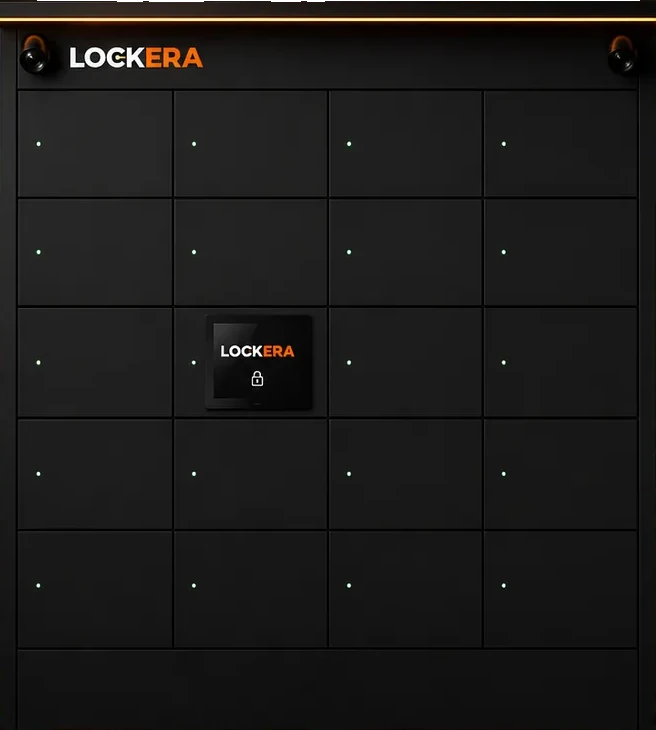
Onboarding is digital, approval is digital, statements are digital. Then a card, a cheque book, a sanction letter or a KYC file has to physically reach somebody, and the process reverts to a counter, a courier and a signature in a register.
Customers travelling in to collect what a courier could not deliver.
Cards and cheque books cycling back to the branch unclaimed.
Staff issuing items instead of serving and selling.
KYC files and loan papers moving with no verifiable chain.
Teller and vendor handovers relying on presence and paperwork.
Assembling evidence after the fact, from registers.
How one manual handover turns into a cost across the whole branch network.
5 challenges · 5 operational costs · 1 manual handover behind all of them
Lockera is more than a document locker. It is a controlled exchange layer for everything a branch issues, receives and has to account for — with the same controls applied to the physical step as to the digital one.
Customers collect from the lobby at any hour with a single-use code.
Items a courier could not deliver divert to a locker, not back to origin.
KYC files and loan papers moved between branch and back office with a record.
Two authorised identities required before a compartment opens.
Teller and vendor exchange without a face-to-face transfer.
Personal and operational storage with role-based access.
| Measure | A counter handover | Lockera controlled exchange |
|---|---|---|
| Collection hours | Branch hours | Lobby access around the clock |
| Customer effort | A visit and a queue | Collect on the way past |
| Undelivered items | Returned to origin | Diverted to a locker |
| Custody record | A signature in a register | Identity, time and image |
| Two-person control | Both present at once | Dual authorisation, logged |
| Staff time | Spent issuing items | Spent on service and sales |
| Audit evidence | Assembled on request | Exported on demand |
| Multi-branch view | Branch by branch | One dashboard across the network |
Lockera is a complete hardware, cloud software and identity stack, engineered for institutions where every exchange has to be provable after the fact.
Heavy-gauge steel lockbanks with electronic solenoids, touchscreens, camera capture, tamper detection and battery backup, specified for branch lobbies, ATM vestibules and back-office floors.
Custody per item, dual-authorisation events, access attempts including failures, dwell and expiry alerts, and an exportable audit trail by branch, region or item class.
Staff ID, RFID, PIN and customer OTP access, with APIs into core banking, CRM and card-management systems so issue and collection post against the customer record.
Branch footfall, undelivered items, custody evidence and two-person control all trace back to one decision: whether the physical handover is governed by procedure, or by the compartment itself.
Remove the visit a two-minute handover currently requires.
Give a failed courier delivery somewhere better to go.
Identity, time and image behind every exchange.
Applied by the compartment, not by procedure alone.
Staff on service and sales instead of issuing.
Custody, exceptions and utilisation across every branch.
Lobby and vestibule collection across a branch network.
Distributed collection without a branch estate.
Controlled exchange at smaller sites.
Policy documents and client files with custody attached.
File movement between branch and processing centre.
Vendor handover points under dual control.
We map item types, volumes, undelivered rates and candidate placements.
Compartment mix, lobby or vestibule siting, access roles and dual-control rules.
Installation plus integration with core banking, CRM and card management.
Customers, branch staff and vendors start collecting and depositing immediately.
The branch places the item in a compartment against the customer record. The customer receives a single-use OTP and QR code on their registered mobile number, and opens the compartment at the bank's own lobby or vestibule unit. No token counter, no queue, and no appointment.
Instead of cycling back to origin and waiting for the customer to visit during banking hours, an undelivered card or cheque book can be placed into a locker at the branch nearest the customer. They collect with a code at a time that suits them, which is usually the difference between an item being collected and being destroyed.
A compartment can be configured to require two authorised identities before it opens, with both recorded against the event. The control is enforced by the compartment rather than resting on procedure, and an attempt with only one identity is logged as a failed attempt.
Item, compartment, the identity or identities that authenticated, timestamp and a camera capture, written to an append-only log. Failed attempts are recorded alongside successful ones. The log is exportable by branch, region, item class or date range.
Banks use Lockera as a controlled handover point between tellers, branches and cash-management vendors, with dual authorisation, tamper detection and full logging on those compartments. It is designed to fit your existing cash process and its controls rather than to replace your vault, and the specification for any cash application is agreed with your own operations and risk teams.
Lockera exposes APIs for allocation, notification, collection and custody events, so an issued card or cheque book moves through dispatched, ready and collected against the customer record in your own systems, and reconciliation does not depend on a separate list.
Yes, and that is the usual placement where collection outside branch hours is the goal. Units are specified for lobby, vestibule and back-office siting, with the access window set per site.
One dashboard covers every branch: items awaiting collection, dwell and expiry, failed access attempts, dual-authorisation events and unit health, with role-based views so a branch manager, a regional head and central operations each see the right scope.
Each unit carries battery backup and an offline cache. Customers and staff continue collecting and depositing with offline codes through a full grid or connectivity failure, and the custody log reconciles once the unit is back online.
Apply the same controls to the handover that the rest of the bank already runs on.
Discover how Lockera helps banks and financial institutions take collection off the counter without loosening control.