01
Paper Sign-Out
Ledgers and whiteboards standing in for a custody record.

Hospitals and campuses both run around the clock with populations that turn over by shift and by timetable, and both have to prove who held a device, a specimen or a key at any given moment. A locked cupboard and a sign-out sheet cannot do that. Lockera writes the record as the door closes.
One system for clinical equipment, shared devices, controlled items, keys and student lockers.
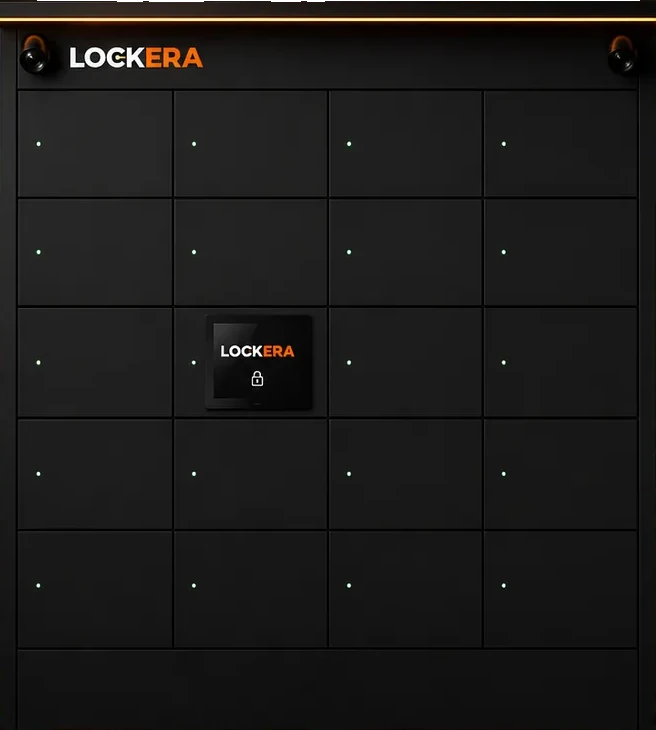
Wards and campuses issue equipment, devices, keys and consumables continuously, to people who change with every shift and every timetable. What comes back is recorded on paper, if at all — and that record is the first thing an inspector asks for.
Ledgers and whiteboards standing in for a custody record.
Pumps, laptops and instruments missing at the moment they are needed.
Populations that change entirely several times a day.
Medication, reagents and keys needing provable, restricted access.
Night shifts and late study with no store open.
Inspection arriving with no defensible chain of custody.
How one missing record turns into a cost across the whole institution.
5 challenges · 5 operational costs · 1 missing record behind all of them
Lockera is more than a storage cabinet. It is an auditable custody layer for everything a hospital or a campus issues and expects back — on every shift, at every hour.
Pumps, monitors and diagnostic devices issued against a staff ID.
Day-use or assigned storage tied to enrolment and employment.
Laptops, tablets and field kit drawn and returned by the hour.
Restricted compartments with dual authorisation where required.
Timed, temperature-aware transfer between departments.
Ward, lab and facility keys with a name against every issue.
| Measure | Cupboard and sign-out sheet | Lockera auditable custody |
|---|---|---|
| Custody record | A handwritten line | Identity, time and image |
| Availability | When the store is staffed | Every shift, around the clock |
| Returns | Chased from memory | Enforced with overdue alerts |
| Restricted items | A second key holder | Role-based, dual authorisation |
| Access rights | Updated by hand | Follow employment and enrolment |
| Audit evidence | Reconstructed afterwards | Exportable on demand |
| Locating an item | Ask around the ward | Held by, and since, on screen |
| Out-of-hours | Nothing issued | Fully self-service |
Lockera is a complete hardware, cloud software and identity stack, engineered for institutions that have to prove where every item has been.
Modular steel lockbanks with electronic solenoids, touchscreens, ID and RFID readers, cameras and battery backup, specified for wards, corridors, labs and campus buildings, including temperature-controlled compartments.
Custody per item, issue and return logs, overdue and expiry alerts, restricted-access reporting, and an exportable audit trail scoped by department, ward or faculty.
Staff ID, student card, RFID and PIN access, with APIs into HRIS, student information systems and asset registers so rights follow employment and enrolment automatically.
Audit readiness, equipment availability, restricted access and staff time all trace back to one thing: whether the record is written as the item changes hands, or afterwards from memory.
Produce a chain of custody for any item on request.
Know who holds each device, and since when.
Stop trained staff running an issue counter.
Self-service when no store is staffed.
Role-based rules, dual authorisation, full logging.
Replace paper with a record that holds up.
Ward equipment, shared devices and controlled items.
Student lockers, laptop pools and lab access.
Secure storage that follows enrolment, term by term.
Instruments, reagents and specimen handover.
Clinical and academic demand on the same estate.
Hostel and residence storage alongside academic buildings.
We map wards, faculties, item catalogues and shift and timetable patterns.
Compartment mix, placement, access roles and restricted-item rules.
Installation, ID enrolment, and integration with HRIS, SIS and asset registers.
Clinicians, students and staff start issuing and returning immediately.
At the moment a compartment opens and closes. Lockera writes the item, the person who authenticated, the timestamp and a camera capture to an append-only log. Nobody signs anything, and there is no step where the record depends on somebody remembering to write a line.
Rights are derived from your own systems rather than maintained separately. Lockera reads identity and entitlement from HRIS or the student information system, so a new clinician can draw equipment on their first shift, and a leaver or a student who has completed their course loses access without anyone updating a list.
Yes. Compartments carry role-based rules, so a given bank can hold general ward equipment that any nurse may draw alongside restricted compartments only a named role can open, with every attempt logged whether or not it succeeded.
Yes. A compartment can require two authorised identities before it opens, with both recorded against the event. This is the usual arrangement for restricted items where a single person should not have unilateral access.
Temperature-controlled compartments hold samples, reagents and medication within a set range, with dwell alerts so an item is not left beyond its safe window, and the temperature record forms part of the same audit trail as the custody record.
Lockera exposes APIs for identity, entitlement, custody and asset events. Issue and return can post against an asset register or a maintenance record, and joiner, leaver and enrolment changes flow through without a parallel list of locker users.
Every custody event for the period and scope you choose - department, ward, faculty, item class or individual - with identity, timestamp, compartment, image reference and, where relevant, the temperature record and the second authoriser. It is produced on demand rather than assembled after a request arrives.
Yes, and this is often the main reason a department adopts it. Night shifts and late study are exactly when a staffed store is closed, and self-service issue and return with a full custody record removes the choice between waiting until morning and taking something unrecorded.
Each unit carries battery backup and an offline cache. Staff and students continue issuing and returning with offline codes through a full grid or connectivity failure, and the custody log reconciles once the unit is back online.
Turn a cupboard and a sign-out sheet into a record that stands up to inspection.
Discover how Lockera helps hospitals, campuses and labs keep equipment findable and custody provable.