01
Failed First Attempts
The rider reaches the door and nobody is there to take the parcel.

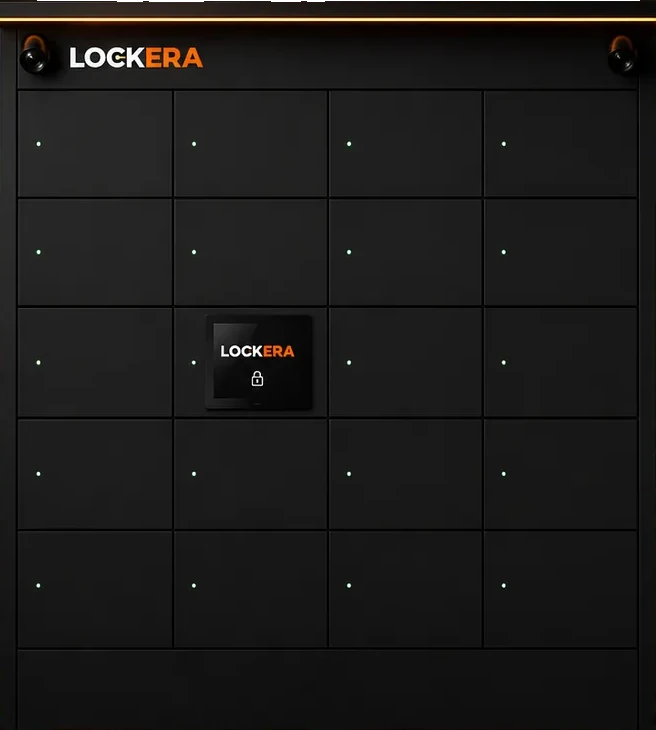
Last-mile networks lose margin every time a rider reaches a door and nobody answers. Lockera gives couriers, 3PLs and e-commerce operators a secure, always-available drop point, so a parcel is handed over on the first visit whether or not the recipient is home.
One network for courier drop-off, customer pickup, returns collection and rider-to-rider handover.
A parcel that misses its window is not simply late. It is re-scheduled, re-routed and re-attempted, and often sent back — each step consuming rider hours and eroding a margin that was already thin.
The rider reaches the door and nobody is there to take the parcel.
The same parcel is carried, scanned and routed two or three times over.
Undelivered parcels go back to the hub, taking the delivery cost with them.
Waiting, calling and negotiating access at the door instead of completing drops.
Security desks, visitor logs and lift queues at every apartment and office tower.
Claims that a parcel never arrived, with no verifiable record of the handover.
How one missed doorstep turns into a cost somewhere else in the network.
5 challenges · 5 operational costs · 1 dependency behind all of them
Lockera is more than a parcel locker. It is a shared handover layer carrying drop-offs, pickups, returns and inter-leg transfers — and it removes a doorstep dependency that no longer scales.
Riders clear many parcels at one stop instead of many separate doors.
Recipients collect on their own schedule, around the clock, with a single-use code.
Customers deposit returns for scheduled collection on a visit already planned.
Shipments pass between first-mile, line-haul and last-mile legs without a hub visit.
Parcels that miss a doorstep window divert to a locker instead of the return leg.
Modular banks absorb festive and sale volume without adding headcount.
| Measure | Doorstep-only delivery | Lockera handover network |
|---|---|---|
| First-attempt success | Depends on the recipient | Independent of the recipient |
| Parcels per stop | One | Many |
| Collection window | A fixed attempt slot | 24/7 self-service |
| Proof of delivery | Photo or signature | Sealed compartment, timestamp and image |
| Returns handling | A separate pickup trip | Same visit as the drop |
| Gated-site access | Cleared visit by visit | Installed once, always cleared |
| Rider time per parcel | High | Low |
| Scaling for peak | Hire more riders | Add compartments |
Lockera is a complete hardware, cloud software and integration stack, engineered for networks that move parcels at volume.
Modular steel lockbanks with electronic solenoids, HD touchscreens, optical drop sensors, surveillance cameras and battery backup, rated for lobbies, basements and outdoor sites.
Live compartment occupancy across the network, drop and pickup logs, courier accounts, dwell-time alerts, site diagnostics and a complete audit trail.
Rider and recipient apps, plus APIs for allocation, status callbacks and notifications, so Lockera runs inside your existing courier platform rather than beside it.
Every metric that matters in last-mile economics traces back to one thing: how often a parcel is handed over on the first visit.
Remove the repeat attempts that quietly double the cost of a shipment.
Turn a route of individual doorsteps into a handful of consolidated stops.
Give every parcel a secure place to wait instead of a trip back to the hub.
Every handover carries a compartment, a timestamp and an image.
Add compartments for festive and sale volume instead of temporary riders.
A permanent, pre-cleared drop point inside gated communities and campuses.
National and regional parcel carriers running dense urban routes.
Providers handling multi-client volume across shared infrastructure.
Platforms carrying high cash-on-delivery and high return rates.
Same-day and rapid networks needing dense, always-open drop points.
Temperature-controlled compartments for medicines and perishables.
Transfer points between long-haul legs and last-mile fleets.
We map route density, parcel volumes, failed-attempt rates and candidate sites.
Bank placement, compartment mix and access model designed around your route plan.
On-site installation, plus API integration with your courier platform and alerts.
Riders, recipients and your operations team start using the network immediately.
The rider authenticates at the unit's touchscreen or scans a courier QR code, scans each tracking number, and a correctly sized compartment opens for every parcel. Closing the door completes the handover and triggers the recipient's notification. No customer, no security desk and no site staff need to be involved.
The recipient receives an SMS, email or app notification the moment the compartment closes, carrying a single-use PIN and QR code. They collect whenever it suits them, including outside delivery hours, and the compartment releases only for that code.
You set the dwell window per site. Lockera sends reminders at the intervals you choose, flags the parcel to your operations dashboard once it exceeds the cutoff, and holds it for courier retrieval rather than pushing it straight into a return leg.
Yes. A customer can deposit a return into a compartment using a code issued against the return authorisation, and it waits there for scheduled courier collection. The return rides back on a visit the courier was already making instead of generating a dedicated trip.
Lockera exposes APIs for compartment allocation, status callbacks, notification triggers and event logs, so drop-offs and pickups appear inside your own OMS, WMS or courier platform. Riders keep working in the app they already use.
Every handover records the compartment, the courier or recipient identity, a timestamp and a camera capture, written to an immutable audit log. That record is exportable and settles “never received” claims without a manual investigation.
Banks are fully modular, combining small, medium, large and extra-large compartments in whatever mix your parcel profile needs, and are configured for indoor lobbies, basements or outdoor weather-proof sites. Capacity is expanded by adding modules as route volume grows.
Each unit carries battery backup and an offline cache. Riders and recipients continue opening compartments with offline PIN codes through a full grid or connectivity failure, and the event log reconciles once the unit is back online.
Yes. Banks run multi-tenant with per-courier accounts, permissions and reporting, so several carriers can serve the same site without seeing each other's parcels or logs. This is what makes a bank viable at a location no single carrier could justify alone.
Turn last-mile handover from a variable cost into a predictable, measurable step in your network.
Discover how Lockera helps couriers, 3PLs and e-commerce operators deliver more parcels in fewer attempts.