
Specifying Parcel Lockers for an Apartment Community
Parcel lockers are specified once and lived with for years. Most of the regret we see traces back to four or five decisions taken early, quickly and without data — a bank sized for the average day, a position chosen for convenience during construction, an access method that assumes every resident will install an app. This is the checklist we work through at survey, written so you can work through it before anyone turns up.
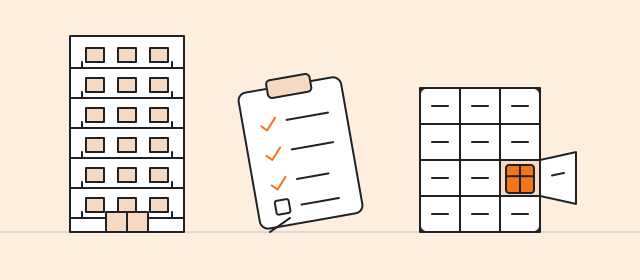
Who this is for
Builders and developers specifying at design stage, RWA committees retrofitting an occupied community, and facility managers who inherit whatever was installed and have to run it. The decisions are the same; the freedom to change them afterwards is not. If you are at design stage, points 4 to 6 are worth more to you than anything else on the list.
Before you size anything: count what actually arrives
Every other decision depends on this one. For two weeks, record what comes into the community: roughly how many items a day, roughly what sizes, and which days spike. You are looking for the distribution and the peak, not the average.
A bank sized for a normal Tuesday is full by midday on the day after a sale weekend. Size for the day that causes complaints, because that is the day the system is judged on.
The checklist
Volume and sizing
- Daily volume at peak, not average — and which days those peaks fall on.
- Size distribution. What share is envelopes and small boxes, what share is cartons, what arrives that will not fit any locker and needs a different answer.
- Dwell time. How long items actually sit before collection, because that decides how much of the bank is available on any given morning.
Siting and services
- Position on the courier’s natural path. A bank a courier has to detour to is a bank that gets bypassed.
- Power and network at that position, confirmed rather than assumed — and whether the site supports wired, Wi-Fi or 4G.
- Indoor, covered or exposed, since that changes the unit specification and is decided at survey.
Access and residents
- Which credential residents already carry. Reusing one beats introducing another.
- A method that needs no app, for residents who will not install one and for domestic staff collecting on their behalf.
- Courier access — how a courier who has never seen the unit completes a delivery without being registered first.
Operations and handover
- Who holds the admin account, and what happens when that person leaves or the committee changes.
- Uncollected-item policy. How long an item sits, who is reminded, who retrieves it and where it goes.
- Service cover. Preventive maintenance, remote diagnostics and who attends when a lock fails on a Sunday.
Five specification mistakes that are expensive to undo
- Sizing for the average day. The bank is then full exactly when it is most needed, and residents conclude it does not work.
- Siting for construction convenience. A position that suited the build programme but sits off the courier’s path produces a bank nobody uses and a mailroom that never closes.
- All compartments the same size. A uniform grid wastes volume on envelopes and refuses cartons. Mix is the point.
- App-only access. It excludes the residents least likely to complain through official channels and most likely to route around the system entirely.
- No uncollected-item policy. Without one the bank silently converts into long-term storage, and effective capacity falls every month.
Questions worth asking any vendor
- What compartment mix are you proposing, and what arrival data is it based on?
- What happens during a power cut or a network outage?
- Which access methods can we assign per group, and can we change them later?
- What exactly is included in service, and what is chargeable?
- Can the bank expand later on the same siting, power and network?
- Who installs it, and is that the same team that supports it afterwards?
The answers matter less than whether the vendor can answer them specifically. Vague answers at quote stage become your problem at handover.
Work the checklist with us
We run exactly this list at survey, and produce the compartment mix, siting plan and access roles that come out of it. Useful whether or not you buy from us.
Book a Site SurveyFrequently asked questions
How many lockers does an apartment community need?
It depends on peak daily volume, size distribution and dwell time, which is why the first step is counting rather than estimating. A community receiving mostly small items with same-day collection needs far fewer compartments than one receiving cartons that sit for two days. The mix is specified per site at survey.
What if a parcel does not fit any compartment?
Oversized items need a defined answer before installation rather than after — usually a separate holding arrangement with the front desk. Specifying the mix around your actual size distribution keeps that exception rare, but it will not be zero.
Can residents collect without installing an app?
Yes. Access methods are assignable per user group and include one-time passwords, QR codes, PIN entry and RFID as well as the app, so a resident who will not install anything can still collect, and so can someone collecting on their behalf.
What happens during a power cut?
Units carry battery backup, so residents can still open their compartments during an outage using offline codes, and every opening is reconciled to the log once connectivity returns. Nothing is stranded inside because the power or the network dropped.
Is a per-home box an alternative to a shared bank?
For villas, row houses and independent homes, yes — that is what ParcellBox is for. For a multi-storey community where deliveries arrive for many households at one address, a shared bank is almost always the right answer. See residential communities for how the two are used together.
More from Lockera
What Actually Drives the Cost of a Smart Locker System
Seven decisions move the number more than anything else. Settle them before you ask for a quote.
Parcel Lockers vs a Manned Mailroom
What each actually does well, where each breaks down, and when a staffed mailroom is still the right call.